Scientists and central planning

by Daniel Lemire

Overconfident individuals often win by claiming more resources than they could defend (Johnson and Fowler). If nobody knows who is strongest, whoever thinks he is the strongest might win by default. That is, there is no better way to fool others than to first fool yourself.

Accordingly, human beings are often overconfident:

  • The teachers know that lecturing is highly effective (even when it is not).
  • Sex partners know that they are great lovers (even when they are not).
  • Star scientists know that they are more often right than others (even if that’s not true).
  • Economists know how they economy work (even when they don’t).
  • The entrepreneur knows his new business will succeed (even when most fails).

In scholarship, overconfidence is a great asset. I routinely fool myself into thinking that I can make a lasting contribution  with my next research projects. By being overconfident, I take risks that I would not take otherwise. If I were more cautious, I would go work in the financial industry, make a lot of money and retire early. Instead, I keep thinking that my next research project might advance Science.

Thus, scientists often develop a God complex:  they somehow know that whatever theories they hold must be true. They also believe that they can accurately assess the significance of the work of others. This is not entirely conscious, of course. They know that it is impossible to make fair assessments. Yet they fool themselves long enough to believe that their assessments are largely correct (even when they are not).

This is somewhat ironic in that Science’s ultimate purpose is to tame our God complex. Yet the very people who pursue science have gigantic egos. They would never admit that Science is built on trial and error. They want you to believe that Science is driven by superior intellects. How can such pompous people be in charge of moderating our God complex? Because while the scientist might be driven by overconfidence, his tools keep him honest. The scientist is like a high speed train: he might have a huge engine, he is (mostly) forced to follow tracks. A scientist operating entirely based on his inflated ego will eventually be derailed.

The God complex leads us straight to the conventional peer review system: write a paper, send it to a journal where a handful of review will assess it. Can reviewers really tell whether the work is significant? Of course, they can’t! But they believe so, for a time. The scientific way is to try and verify. That is how, ultimately, scientists deal with their God complex. Hence all (apparently) correct research papers should be published. Work that has stood the test of time should form the foundation of a field, not work that has been selected by  (false) Gods.

But surely, scientists cannot try all possible theories? They must someone select the most promising directions. However, once we acknowledge the God complex, some natural strategies emerge:

  1. We should reject central planning. We must reject the authority of the few to decide the worthwhile research directions. We should choose to support many small projects rather than fund one large initiative driven by a handful of individuals. Results matter, not authority.
  2. We should test as many different ideas as we can. Scientists should be encouraged to try many different things.

If you think that these strategies sound sensible, consider that they are almost entirely the opposite of what is being done:

  1. Science is increasingly planned centrally around large government bureaucracies. We want to build scientific heroes who will direct other (lesser) scientists. Large teams focus on a narrow set of problems and directed by experienced researchers are the gold standard. Independent thinkers who try different things “waste resources”.
  2. We encourage specialization. One argument which is often raised is that if a professor tries his hand at a new topic, he will be unable to train new Ph.D.s in this new area, thus limiting our ability to produce more Ph.D.s. It is also frowned upon to try an idea, see it fail, and write up the results as a research report: every project should lead to a publication in a respected venue.

By analogy between Science and capitalism, it is as if  the government was funding large corporations at the expense of small shops. It is as if the government funded companies that are highly specific and inflexible at the expense of agile ventures because more stable companies can better train their employees. And, more importantly, it is as if the fate of start-up companies was determined by small secret committees of experts: unless such a committee concludes that the company will work, it cannot launch. It is as if we believed it best to direct the consumer to a few trusted companies, for fear that he might choose to deal with a young unpolished start-up.

In effect, the modern scientist has rejected the free market of ideas. He prefers state-directed communism where a few choose for the masses.

Wikipedia opportunity: There is no entry in Wikipedia for Garage science where independent researchers do bona fide research with modest means.

Further reading: The perils of filter-then-publish and Improve your impact with abundance-based design.

Update: The original title of this post was “scientists are communists”.

Читать далее >>
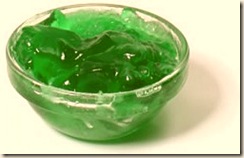
Mint jelly

Mint jelly Mint jelly is a translucent jewel. Not only does it have many uses in cooking, it makes a delicious spread for bread and a tasty condiment with lamb or pork. Used as a glaze for roast or grilled meat or stirred into marinades, mint jelly adds refreshing flavor to many foods.


1.5 cups - firmly packed mint leaves - 375 mL

2.25 cups – water  -  550 mL

2 tbsp - lemon juice  -  30 mL

3.5 cups - granulated sugar  -  875 mL


Green food coloring (optional)

pouch (3 ozl - 85 mL) liquid pectin


  1. Place 4 clean 8-ounce (250 mL) mason jars on a rack in a  boiling-water canner. (You can also use a large, deep saucepan  or stockpot that is at least 3 inches/7.5 cm deeper than the height of the jars.) Fill the jars and canner with cool water that reaches the top of the jars. Cover and bring water to a simmer over medium heat. Do not boil.
  2. Prepare 4 two-piece closures. Set screw bands aside. Place lids in a small saucepan and cover with water. Heat just to a simmer over medium heat, but do not boil. Keep lids warm until ready to use. Do not heat screw bands.
  3. In a colander placed over a sink, rinse mint leaves thoroughly under cold running water. Shake off excess moisture and chop finely.
  4. In a large stainless steel saucepan, combine mint and water. Bring to a boil over medium-high heat. Remove from heat, cover and let steep for 10 minutes. Pour liquid into a damp jelly bag or a cheesecloth-lined sieve set over a large glass measure. Let drip until you have 1 %cups (425 mL) of mint-flavored liquid.
  5. In a clean large, deep stainless steel saucepan, combine mint-flavored liquid, lemon juice and sugar. Over high heat, stirring constantly, bring to a full rolling boil that cannot be stirred down. Stir in liquid pectin, squeezing the full content from the pouch. Boil hard, stirring constantly, for 1 minute. Add a few drops of food coloring (if using). Remove from heat and, using a large slotted metal spoon, skim off foam.
  6. Some jellies set up very quickly, so it is important to move quickly when transferring cooked jelly from the pot to the jars. Because jellies are pure liquids, bubble removal for each jar is not required. Remove a jar from canner and empty hot water back into canner. (Do not dry jar.) Place jar on a tray or towel-covered counter and place a canning funnel in it. Quickly ladle or pour hot jelly into hot jar, leaving 14 inch (0.5 cm) headspace. With a clean damp cloth or paper towel, wipe jar rim and threads to remove any food residue. Using a magnetic or nonmetallic utensil, lift a hot lid from water and center it on jar. Place screw band on jar and, with your fingers, screw band down evenly and firmly, just until resistance is met, then increase to fingertip-tight. Do not over-tighten or use any tools to apply screw bands. Return jar to canner rack and repeat until all jelly is used.
  7. When all jars are filled, lower rack into canner and ensure jars are completely covered by at least 1 inch (2.5 cm) of hot water. Cover canner and bring water to a full rolling boil over high heat. Process (continue boiling rapidly) for 10 minutes, starting timer only when water reaches a ~ rolling boil. At the end of the processing time, turn heat off and remove canner lid. Wait 5 minutes, then remove jars, without tilting. Place jars upright on a towel in a draft-free place and let cool, undisturbed, for 24 hours.
  8. After 24 hours, check lids for seal. Remove screw bands and press down on center of each lid with your finger. Sealed lids will be concave (they'll curve downward) and will show no movement when pressed. Jars that haven't sealed properly must be refrigerated immediately or reprocessed (see page 418). Rinse and dry screw bands. Wipe jars and, if desired, loosely reapply screw bands. Label jars and store in a cool, dry, dark place.

Читать далее >>

***

..то, что мы называем разумом человека, его сердцем, его волей, есть плод не индивидуального, а общественного развития, в нас, быть может, 9/10 общественных элементов и лишь 1/10 чисто личного начала.

П.Ф. Каптерев

Читать далее >>

Лошадь сдохла – слезь!

Лошадь сдохла – слезь!В жизни есть огромное количество ситуаций, вещей, или людей, которые нас не устраивают и уже давно.
Например:
– Отношения, которые давно в тягость.
– Работа, которая давно надоела.
– Бизнес, который приносит одни убытки.

Но по неизвестным причинам мы цепляемся за борт тонущего корабля в надежде, что он может быть, поплывет когда-нибудь, тратя на это оставшиеся нервы, время, деньги.

Разумеется, если принимать во внимание установки – «терпенье и труд, все перетрут», необходимо проявлять упорство и не сдаваться. И в этом случае должен быть индикатор – показатель – точные сроки исполнения целей.

Но если его нет, тогда уясни древнюю индейскую пословицу:

Лошадь сдохла – слезь!

Казалось бы все ясно, но

  • Мы уговариваем себя, что есть еще надежда.
  • Мы бьем лошадь сильнее.
  • Мы говорим «Мы всегда так скакали».
  • Мы организовываем мероприятие по оживлению дохлых лошадей.
  • Мы объясняем что наша дохлая лошадь гораздо «лучше, быстрее и дешевле».
  • Мы организовываем сравнение различных дохлых лошадей.
  • Мы сидим возле лошади и уговариваем ее не быть дохлой.
  • Мы покупаем средства, которые помогают скакать быстрее на дохлых лошадях.
  • Мы изменяем критерии опознавания дохлых лошадей.
  • Мы посещаем другие места чтобы посмотреть, как там скачут на дохлых лошадях.
  • Мы собираем коллег, чтобы дохлую лошадь проанализировать.
  • Мы стаскиваем дохлых лошадей ,в надежде, что вместе они будут скакать быстрее.
  • Мы нанимаем специалистов по дохлым лошадям.

Если лошадь сдохла – слезь.

источник

Читать далее >>

Мрачные ночные раздумья

Что-то я начала думать о старости, которая меня (надеюсь) ждет. Проблема даже сложнее чем только деньги на спокойное и безбедное житье в хорошем климате или почти неизбежное одиночество, а также пара десятилетий жизни в новом мире, ставшем абсолютно непонятным.

Я неверующий человек, дистиллированный атеист, но в христианской идее загробной жизни, как я ее понимаю, есть очень верное зерно. Опять-таки, насколько я понимаю, весь рост и развитие бессмертной души считается возможным только в период земной жизни. После смерти душа уже не изменится, нельзя будет ничего в себе создать или стать лучше. Лубочные картинки сияющего рая, где все занимаются вольным творчеством на золотых полях, не имеют отношения к доктрине. Как и булгаковский образ маленького домика в чистилище, где Мастер будет писать новые романы - мертвые ничего не создают. Вся наша способность к творению действительна только на земле. Поэтому короткая земная жизнь, при всей ее нелепости, так важна. Некоторые атеисты, думая, что загоняют верующего собеседника в ловкую ловушку, спрашивают - "Если твоя душа бессмертна, и ты хорошо себя вел, то почему с моей стороны будет однозначно плохим поступком убить тебя прямо сейчас? Ты же прямиком на небо отправишься, избегнув множество тягот. И даже не будешь читером, срезавшим угол длинной дистанции". Ответ - преждевременная смерть не дает человеку пройти весь путь развития, доработать свою душу до состояния, пригодного к полноценной вечности. По этой же причине в религиозном сознании так печальна смерть ребенка - он не успел наделать грехов, которые стоило бы выправлять, но и вообще ничего не успел сделать с собой, поэтому страшно обделен. Поэтому же страшно умирать внезапно - нужно подготовиться. Есть еще история с искуплением через адские страдания, но, насколько я понимаю, это тоже апокрифическая картинка. Сковородки, как и арфы, не предусмотрены. Грешные души мучаются не под специально организованными пытками, а от своей недоделанности в земной жизни и невозможности единения с божественным.

Старость - это период, начинающийся с печального момента, когда человек теряет способность серьезно менять свою жизнь. Что-то мне подсказывает, что однажды это случается - кончаются силы, подводит здоровье, теряется понимание устройства окружающего мира и способность осваивать новое. Можно еще как-то управлять событиями и принимать решения, но, по большому счету, радикально уже ничего не сделаешь - не родишь детей, не заработаешь денег, не построишь дом, не поменяешь страну, не изменишь отношения с важными людьми. Выстрел прозвучал, пуля в воздухе, ничего не исправишь. Фактически, аналог загробной жизни.

И это надолго. Здоровая женщина может рассчитывать прожить лет до девяноста, из которых пятнадцать придется на настоящую старость, когда можно только пожинать сделанное ранее и наблюдать за окружающим миром. Видимо, это и имеется ввиду в известном афоризме "чтобы не было мучительно больно". Пятнадцать лет, неимоверный срок, при современных темпах развития пара эпох пройдет. Длинные дни, еще более длинные ночи под бессонницу. Перспективы нет, планы, которые так помогают сейчас, бессмысленны.

Не думаю, что нужно всю жизнь работать на старость, но иметь ввиду перспективу необходимо.

Мне кажется продуктивной идея судить об общих жизненных результатах по тому периоду, когда уже ничего не можешь сделать. Абсолютный гамбургский счет, все понятно, чего там стоили проекты, статусы, книги, статьи, друзья, семейная жизнь, дома и финансовые проекты. Еще понятней после смерти, но это уже не так интересно.

Даже временные периоды без контроля помогают что-то важное осознать. Сны, например. Несколько раз меня весьма огорчали собственные поступки в сновидениях. Или сильное алкогольное опьянение, когда все непрочные ограничители слетают. Для меня один алкогольный эпизод стал весьма сильным стимулом к развитию - утром я ясно увидела некоторую правду о себе и поняла, что таких душевных свойств мне не нужно, пусть даже они и не проявляются в поведении почти никогда.

Источник

Читать далее >>

blogger templates | Make Money Online